Should You Buy a Camera if Your Phone Is Great?
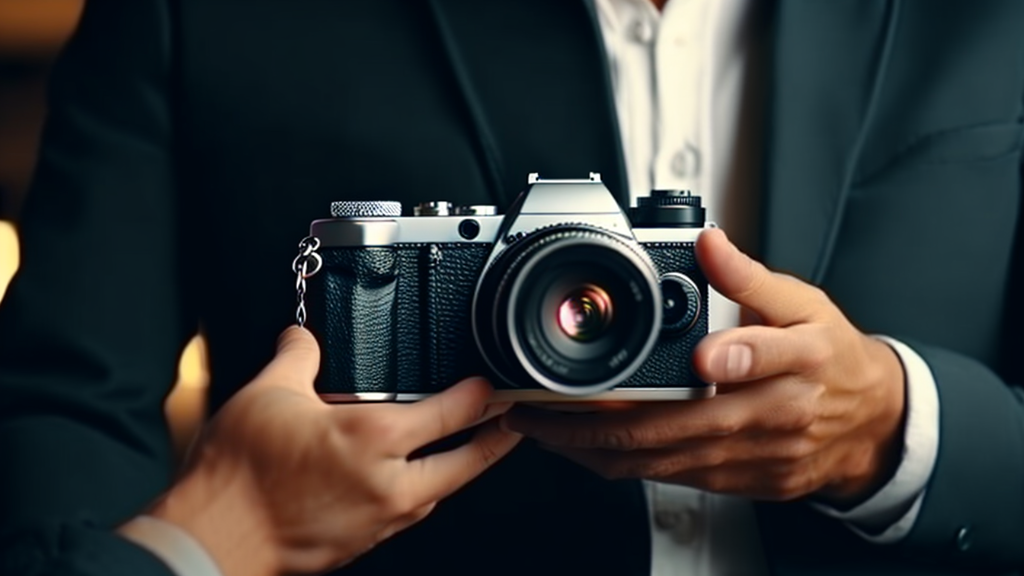
Explore the advantages of dedicated cameras over smartphones and decide if investing in one is right for you.
You have a smartphone with a great camera, and you're wondering if buying a dedicated camera still makes sense. Smartphones are convenient and always with you, but they have limitations that a real camera can overcome. Let's explore why you might still consider a dedicated camera.
Smartphone cameras are excellent for quick shots and social media posts. They excel in daylight conditions, thanks to advanced computational photography and the power of AI to enhance images. However, when it comes to more serious photography, dedicated cameras offer significant advantages.
One of the main advantages of a dedicated camera is its larger sensor. Larger sensors can capture more light, making them superior in low-light conditions. This means better photos at concerts, indoors, or during sunset. The larger sensor also provides better dynamic range, capturing more detail in both bright and dark areas of a photo.
Dedicated cameras also offer interchangeable lenses, allowing you to choose the right lens for any situation. Whether you need a wide-angle lens for landscapes or a telephoto lens for wildlife, a dedicated camera can adapt to your needs. Smartphones, while versatile, are limited by their fixed lens systems.
Another area where dedicated cameras excel is in optical zoom. While smartphones use digital zoom, which often results in loss of quality, dedicated cameras offer true optical zoom. This means you can get closer to your subject without sacrificing image quality.
When it comes to achieving a professional look, such as background blur (bokeh), dedicated cameras have the edge. The larger sensor and real lenses create a natural bokeh effect that is difficult to replicate with smartphones, despite their portrait modes.
Dedicated cameras also provide better control over settings. You can manually adjust shutter speed, aperture, and ISO, giving you full creative control over your photos. This level of control is essential for capturing fast-moving subjects or creating long exposure shots.
Despite these advantages, smartphones are unbeatable in terms of convenience. They're compact, always on hand, and allow for instant editing and sharing. For casual photographers, a smartphone may be all you'll ever need.
However, if photography is a passion or part of your profession, investing in a dedicated camera could be worthwhile. The flexibility, quality, and creative control they offer are unmatched by smartphones.
Consider your needs and the types of photos you want to take. If low-light performance, optical zoom, and creative control are important to you, a dedicated camera is a valuable tool. But if convenience and quick sharing are more important, your smartphone may suffice for now.
Low-Light Performance
In low-light situations, dedicated cameras perform significantly better than smartphones. This is mainly due to their larger sensors, which can capture more light, resulting in clearer and more detailed images. When shooting in dimly lit environments, such as indoor events or nightscapes, a dedicated camera can deliver superior results with less noise and greater detail in shadows and highlights.
Versatility with Lenses
One of the standout features of dedicated cameras is their ability to use interchangeable lenses. This means you can switch lenses to suit the scene or subject you're capturing. Whether it's a wide-angle lens for expansive landscapes or a macro lens for close-up details, the flexibility a dedicated camera provides can't be matched by the fixed lenses on smartphones. This versatility is particularly valuable for photographers looking to experiment with different styles and perspectives.
Optical Quality and Zoom
Dedicated cameras offer true optical zoom capabilities, allowing you to get closer to your subject without degrading image quality. Unlike digital zoom on smartphones, which enlarges and crops the image, optical zoom maintains the integrity of the photo. This is crucial for wildlife, sports, or any situation where you need to capture details from a distance. Additionally, the optical quality of dedicated camera lenses generally surpasses that of smartphone lenses, producing sharper and clearer images.
Creative Control and Features
With a dedicated camera, you gain access to a wealth of manual controls and features that enhance your creative expression. You can adjust shutter speed, aperture, and ISO settings to achieve specific effects or adapt to challenging lighting conditions. Features like long exposure, bracketing, and custom modes allow for tailored shooting experiences that smartphones can't replicate. These controls are essential for photographers who want to refine their technique and capture unique shots that stand out.
Convenience vs. Quality
While smartphones offer unparalleled convenience, dedicated cameras are designed for quality. The choice ultimately depends on your priorities as a photographer. If you value portability and ease of use for casual shooting, a smartphone is ideal. But if you're seeking high-quality images and the ability to explore various photographic techniques, a dedicated camera is worth considering. Weighing convenience against quality will help you decide which tool aligns best with your photography goals.